
What is affected
- Peri-implant mucositis
- Soft tissue only
- Peri-implantitis
- Soft tissue and supporting bone
Long-Term Implant Care
An implant is not maintenance-free. Daily cleaning and regular professional reviews protect the gum and bone around it, and early attention to warning signs gives the best chance of resolving problems.
Clinical assessment • Individual treatment planning • Treatment at CARE Hospital, Bhubaneswar
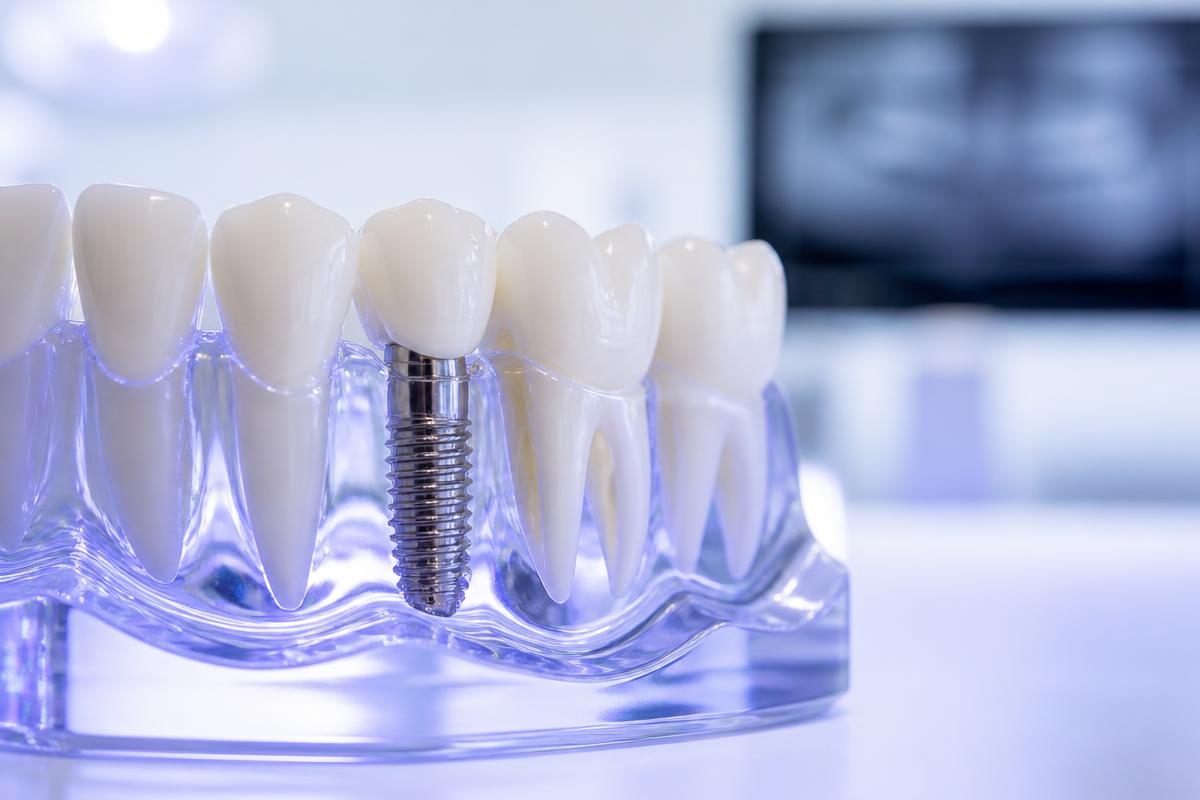
Implants need the same care as natural teeth, plus attention to the gum around them. Brush twice daily, clean between and around the implant with interdental brushes or floss designed for implants, avoid smoking, and attend professional reviews and cleaning as advised. Report bleeding, swelling, looseness or discomfort early, because problems around implants progress silently.
The implant does not integrate with the bone during initial healing, often within the first months.
Bone support is lost over time, most often through peri-implantitis.
Smoking, uncontrolled diabetes, poor hygiene, heavy grinding and missed reviews.
Screw loosening, crown chipping or component fracture, which may be repairable.
Examination and radiographs establish what is affected and how far it has progressed.
Professional cleaning and hygiene measures address active inflammation.
Depending on findings this may be non-surgical, surgical or component replacement.
An implant that has lost support may need to be removed.
Replacement is considered after healing, sometimes with grafting.
Maintenance visits, and any treatment for a problem around an implant, are costed according to what is required. This is confirmed after examination and radiographs.
Patients across India can begin with an online consultation and receive a preliminary treatment roadmap. Clinical examination, final planning and treatment take place at CARE Hospital, Bhubaneswar.
Patients commonly travel to Bhubaneswar from Cuttack, Puri, Berhampur (Brahmapur), Sambalpur, Rourkela, Balasore, Baripada, Angul and Jharsuguda. Physical examination and implant treatment take place at CARE Hospital, Bhubaneswar, Odisha.

Many implants function for many years with good hygiene and regular reviews, but no lifespan can be guaranteed. Outcomes depend on gum health, bone support, habits and general health.
Yes. Peri-implant mucositis affects the gum, and peri-implantitis also affects the supporting bone. Both are linked to plaque and are why professional reviews matter.
Implants and their crowns cannot decay, but the gum and bone around them can still become diseased, and neighbouring natural teeth can decay.
Intervals are individual. Your dentist will set a recall schedule based on your gum health, medical history and the type of implant work you have.
Bleeding or pus around the implant, persistent soreness, gum recession, a loose crown or any movement of the implant should be reported promptly.
Often yes, after the site has healed and any cause has been addressed. Grafting is sometimes needed before a new implant can be placed.
Yes. Smoking is consistently associated with higher rates of peri-implant disease and implant failure.
Yes. Begin with a free online consultation from anywhere in Odisha and share your reports; assessment is carried out at CARE Hospital, Bhubaneswar.
Share your symptoms and reports online and the implant team will advise on the next appropriate step.
Ask about suitability, treatment stages, alternatives and cost considerations.
Have an existing implant plan or quotation reviewed.
Learn moreReplacing one missing tooth with an individual implant.
Learn moreRehabilitation planning for extensive tooth loss.
Learn moreFixed full-arch implant treatment approaches explained.
Learn moreOptions when available bone volume is insufficient.
Learn moreWhat affects implant treatment cost and how plans differ.
Learn moreLearn about Dr. Sauvik Singha and the implant team , and review the official CARE Hospitals page for the Bhubaneswar treatment location. Additional clinical references are added after review by the dental team.
This page provides general educational information about long-term dental implant maintenance, peri-implant disease and implant failure. Treatment suitability, risks, expected outcomes, treatment duration and cost vary between patients and should be assessed by a qualified dental professional.