
Autograft
- Source
- Your own bone from another site
- Typical use
- Larger defects where extra volume is required
Implant Site Preparation
When the jawbone at a missing tooth site is too narrow or too short, a bone graft may be advised to rebuild support before or during implant placement. Whether grafting is needed is decided only after clinical examination and imaging.
Clinical assessment • Individual treatment planning • Treatment at CARE Hospital, Bhubaneswar
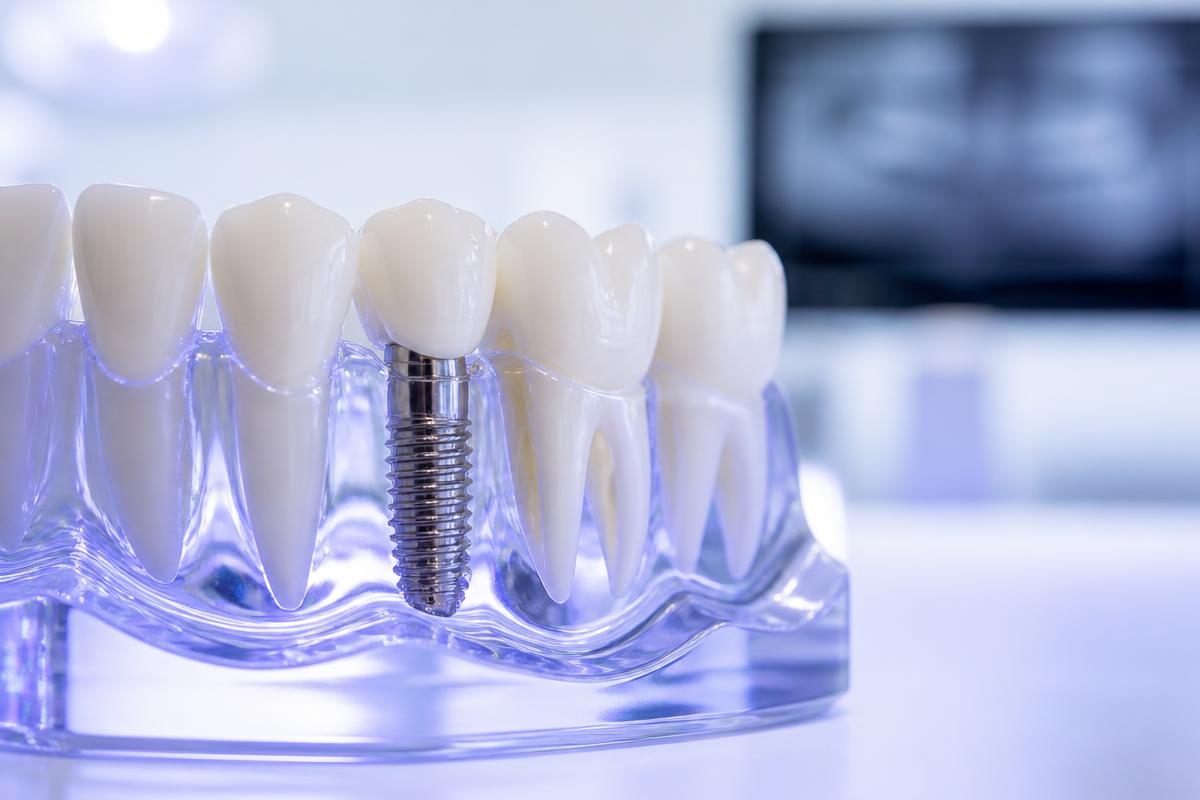
Bone grafting is a procedure that adds bone or a bone substitute to a jaw site that lacks enough volume to hold an implant securely. The graft material is placed and allowed to heal so new bone forms. Depending on the amount needed, grafting may be done at the same visit as implant placement or several months before it.
The material chosen depends on the defect, the site and clinical judgement at the time of assessment.
Graft placed into a socket at the time of extraction to limit later shrinkage.
Graft with a membrane used to rebuild width or height at an implant site.
Wider rebuilding of a collapsed ridge before implants can be placed.
Used in the upper back jaw where the sinus limits available height.
Read about sinus lift →Grafting adds surgical steps and materials, so it affects the overall plan. The cost depends on the graft type, the size of the defect and whether it is done with or before implant placement, and is confirmed after assessment.
Patients across India can begin with an online consultation and receive a preliminary treatment roadmap. Clinical examination, final planning and treatment take place at CARE Hospital, Bhubaneswar.
Patients commonly travel to Bhubaneswar from Cuttack, Puri, Berhampur (Brahmapur), Sambalpur, Rourkela, Balasore, Baripada, Angul and Jharsuguda. Physical examination and implant treatment take place at CARE Hospital, Bhubaneswar, Odisha.

No. Grafting is only advised when imaging and examination show there is not enough bone width or height to support the implant securely.
The procedure is carried out under local anaesthesia so it should not be painful during treatment. Some swelling and discomfort afterwards is normal and is managed with prescribed medication.
Healing time varies with the graft type and the size of the defect. Small grafts placed with an implant heal alongside it, while larger staged grafts need several months before implants can be placed.
It may be your own bone, processed donor bone, a processed animal-derived mineral or a synthetic substitute. The choice is made clinically for each case.
Yes. Grafts can lose volume or become infected, particularly in smokers or where healing is impaired. In such cases the procedure may need to be repeated.
Sometimes. If enough bone remains for the implant to be stable, both can be done together. Larger defects usually require a staged approach.
Smoking reduces blood supply to healing tissues and is associated with higher graft and implant complication rates. Stopping is strongly recommended.
Start with a free online consultation from anywhere in Odisha. The need for grafting is confirmed only after clinical examination and 3D imaging at CARE Hospital, Bhubaneswar.
Share your history and any existing reports online, then receive a preliminary treatment roadmap before your clinical assessment.
Ask about suitability, treatment stages, alternatives and cost considerations.
Upper-jaw implant planning and sinus augmentation.
Learn moreReplacing one missing tooth with an individual implant.
Learn moreWhen an implant may be placed at the time of extraction.
Learn moreRehabilitation planning for extensive tooth loss.
Learn moreDigital planning and guided implant placement.
Learn moreWhat affects implant treatment cost and how plans differ.
Learn moreLearn about Dr. Sauvik Singha and the implant team , and review the official CARE Hospitals page for the Bhubaneswar treatment location. Additional clinical references are added after review by the dental team.
This page provides general educational information about bone grafting procedures used to prepare a site for dental implants. Treatment suitability, risks, expected outcomes, treatment duration and cost vary between patients and should be assessed by a qualified dental professional.